A practical guide to mattress materials
Reading Organic Latex Mattress Certifications Without the Marketing Hype
A seal on a mattress label can be reassuring, but it is not a verdict on the whole bed. The useful questions are narrower: What material was certified? Under which standard? And does the document describe the component in the mattress—or merely an ingredient somewhere upstream?
Published November 12, 2026
Shopping for an organic latex mattress can feel like entering a forest of good intentions. Labels promise natural materials, responsible sourcing, cleaner air, and sleep in closer harmony with the earth. Some of those claims may be backed by serious standards and independent verification. Others are broad enough to sound more conclusive than the paperwork behind them.
The distinction matters because a mattress is not one material. It is a small assembly: a latex core or comfort layer, fabric, wool or another fire barrier, thread, adhesives or quilting, and sometimes springs or foam. A certification may apply to one of those parts, to a particular textile, or to a company’s production process. It does not automatically extend to every layer simply because the finished product is described as organic.
Reading the label well is less a matter of collecting seals than of learning their boundaries. A certification tells you something specific, within a defined standard and scope. The buyer’s task is to find out what that something is.
Start with the material, not the adjective
“Organic latex mattress” is a compact phrase, but it can conceal several different claims. It may refer to latex certified as organic, a mattress made with a certified organic latex component, or a bed whose cover and other materials also meet separate organic textile requirements. The wording alone does not tell you which interpretation applies.
Latex itself is made from rubber-tree sap, but “natural” and “organic” do not mean the same thing. Natural latex describes its source; organic certification concerns how qualifying raw material was produced and handled under a defined standard. A product may contain natural latex without having certified organic latex. Conversely, a mattress can include a certified organic latex layer alongside components that are not certified organic.
That is not necessarily a flaw. A mattress can be a thoughtful choice without every component carrying the same certification. What matters is whether the seller describes the construction accurately, and whether the shopper can make a decision with the information available. A label that identifies one certified layer is more useful than a sweeping claim that leaves the layers unnamed.
For each claim, ask: Is this about the latex, the fabric, the whole mattress, or the manufacturer’s facility? If the answer is unclear, the marketing language has outrun the evidence.
What a latex certification can—and cannot—tell you
One standard shoppers may encounter is GOLS, the Global Organic Latex Standard. It is relevant to organic latex and sets requirements for the material and its supply chain. A GOLS claim should be tied to identifiable certified material and documentation, rather than treated as a general certificate for every part of a finished bed.
Ask whether the latex used in the mattress is covered by a valid certificate and whether the certificate can be connected to the product being sold. The paperwork may identify a supplier, processing site, product category, or scope. Those details are not bureaucratic decoration: they help establish whether the certification applies to the latex in question.
Even a legitimate latex certification does not answer every question a mattress buyer might have. It does not, by itself, tell you whether the bed will feel comfortable, suit your sleeping position, last as long as you hope, or work on your foundation. Nor should it be mistaken for a universal declaration that the entire finished mattress is organic, chemical-free, or free of emissions. Those are separate claims, requiring their own evidence and, often, more careful wording.
Standards also change, and certification scope can vary. If a detail is important to your decision, look for current documentation or ask the manufacturer for clarification rather than relying on a logo copied onto a product page.
The label is a map of scope
Other familiar certifications may concern textiles, chemical testing, or emissions. They are not interchangeable, and a mattress can carry several without any one of them covering the whole product.
- GOTS is associated with organic fibers and textile processing. When cited for a mattress, check which fabric or textile component is covered and whether the claim applies to the finished product or to a supplier’s certified material.
- OEKO-TEX certifications relate to testing or requirements defined by particular OEKO-TEX standards. They should not be treated as proof that a material is organic; read the exact standard and product scope.
- GREENGUARD Gold concerns chemical emissions under its applicable testing and certification program. It is not an organic certification and does not establish the origin of latex, cotton, or wool.
Think of these marks as different keys, each opening a different door. A textile certificate may help answer questions about cotton. An emissions certification may address a defined set of airborne compounds under specified conditions. A latex standard may speak to latex sourcing and processing. None is a master key to every question about a mattress.
When a product page shows a cluster of logos, the sensible response is neither automatic trust nor automatic suspicion. It is a request for the chain of meaning: Which standard? Which organization issued or verified the certificate? Which component? Which product or facility? Is the documentation current?
How to read the documents
Good documentation is usually more specific than advertising copy. A manufacturer may provide a certificate, a scope document, a material declaration, or written confirmation from a supplier. The paperwork need not be dramatic; it should be legible and connected to the claim.
Begin with the name of the standard and the certifying or auditing body. Then look for the scope. A certificate may cover a processing facility, a particular material, or a defined product group. It may not name the mattress model you are considering. That gap does not prove the claim is false, but it gives you a reasonable question to ask: how does this document apply to this model?
Next, follow the material through the construction description. Does the retailer say “certified organic latex,” or simply “organic mattress”? Is the latex core identified as Dunlop or Talalay? Are the cover and fire barrier described separately? Does the brand distinguish certified materials from other components? A clear layer-by-layer account gives the certification a place in the actual bed.
If the answer arrives as a fresh repetition of the slogan—“made with the finest organic materials”—ask again, more narrowly. You are not seeking a courtroom deposition. You are trying to understand what you would be sleeping on.
A short checklist for closer scrutiny
Before treating a label as meaningful evidence, see whether you can answer these questions:
- What exactly is certified? The latex, the cotton cover, the wool, the finished mattress, or a facility?
- Which standard is named? “Certified” is incomplete without identifying the certification or standard.
- Who verified it? Look for a certifier or authorized certification body, not only a brand’s own statement.
- Can the document be matched to the product? Check its scope, product category, material, and dates where available.
- Are other layers disclosed? A useful construction description separates latex, textile, fire barrier, springs, foam, and other components.
- Is the claim carefully phrased? A certified component is not necessarily a fully certified mattress.
- What is not being claimed? Organic status does not establish comfort, durability, medical benefit, or zero emissions.
A seller who answers these questions plainly is making the comparison easier, whether or not the answer is the one a shopper hoped to hear. Specificity is often more revealing than a page crowded with reassuring language.
Look beyond the seals to the bed itself
Certification can help with material provenance and defined production requirements, but a mattress remains a functional object. It must support the sleeper, fit the frame, and suit the household’s care needs. These questions are less photogenic than a seal, but they matter every night.
Compare the number and thickness of layers, the firmness options, and whether the comfort materials can be replaced or rearranged. Check the mattress height against your sheets and bed frame. Confirm the recommended support surface: latex models may require a suitable platform or slatted foundation, and the manufacturer should explain any limits on slat spacing or use with an adjustable base.
Then read the warranty and trial terms with the same attention you gave the material claims. A limited warranty is not the same thing as a promise that a mattress will retain its original feel indefinitely. A layer exchange policy, if offered, has its own time limits and conditions. Care instructions matter too: some covers are removable but not machine washable; some mattresses are spot-clean only; some components should not be exposed to direct heat or sunlight.
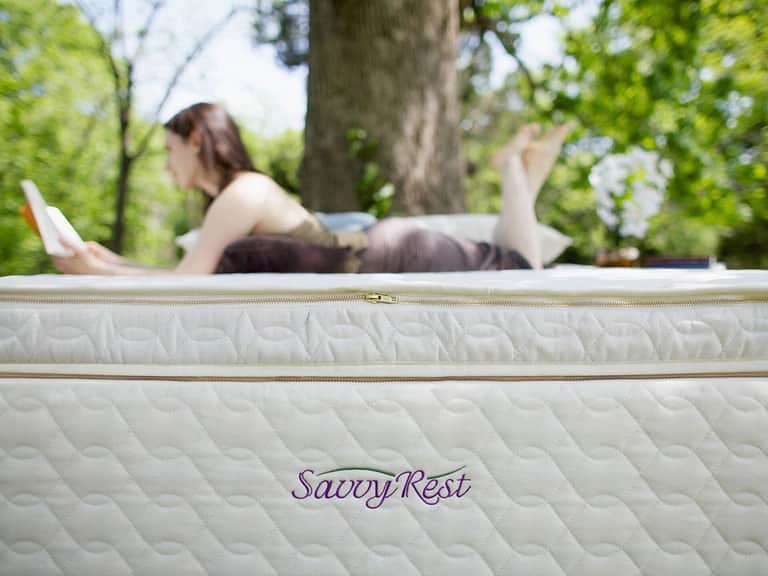
For example, the Savvy Rest Unity Pillowtop Latex Mattress describes its components separately, including certified organic Dunlop latex, a certified organic cotton casing, and wool used as a flame barrier. That kind of list gives a reader something concrete to examine: the claimed materials, their roles, and the distinction between layers. It is not a substitute for reviewing the applicable certification documents, nor does the description alone establish the scope of each certificate. It is, however, a more useful starting point than a single broad adjective.
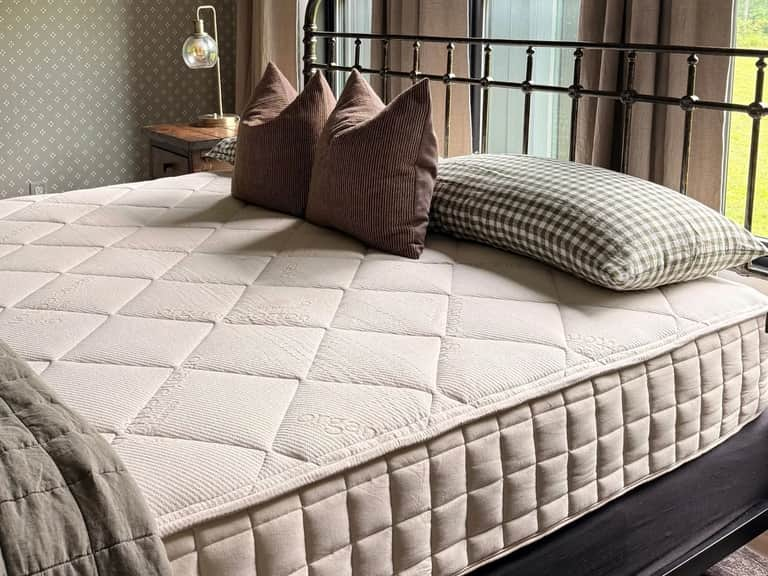
The Naturepedic Serenade Organic Hybrid Mattress offers another illustration of why construction details matter. Its description names encased coils, a Dunlop latex comfort layer, wool, and cotton. For any mattress, a component list lets you compare both material claims and design choices; it does not mean that every component is covered by one certification.
A note on health and environmental language
Organic and natural claims can carry a quiet suggestion of personal health benefits. Some shoppers are drawn to certified materials because they want greater supply-chain visibility or wish to limit particular substances. Those are understandable priorities. They should not be turned into medical promises.
A certification does not show that a mattress will resolve back pain, prevent allergies, improve sleep, or be suitable for every person. Nor does “natural” mean harmless in every context, or “synthetic” necessarily mean unsafe. If a particular allergy, chemical sensitivity, or medical condition is part of the decision, consult an appropriate health professional and ask manufacturers precise questions about materials and exposure. Avoid relying on vague claims such as “non-toxic” unless the seller defines what is meant and what evidence supports it.
Environmental claims deserve the same discipline. Organic sourcing may be one factor in a broader assessment, but it does not by itself explain a product’s full environmental footprint, including manufacturing, transport, durability, and end-of-life disposal. The most honest comparison keeps the claim proportional to the evidence.
Questions worth sending to a manufacturer
A concise email can resolve much of the uncertainty. You might ask:
- Which components in this specific mattress are certified organic?
- What standard applies to each component, and who issued or verified the certification?
- Can you provide current documentation or explain how the certificate’s scope matches this model?
- What materials are used in the cover, fire barrier, and any non-latex layers?
- What foundation or bed-frame requirements apply, and how should the mattress be maintained?
Notice what these questions do not require: a manufacturer to declare its product perfect. They ask for boundaries, construction, and care—ordinary facts that help a buyer decide. A useful answer names the component and the standard. A less useful one returns to the headline claim without addressing the question.
The quiet value of a precise claim
Organic latex certifications are most valuable when treated as evidence with a defined reach, not as a halo that settles every question. The latex may be certified while the cover is assessed under a different standard; the cover may be organic while the finished mattress has no whole-product organic certification. These distinctions are not loopholes to be ignored. They are the practical architecture of an assembled product.
Read the standard. Identify the component. Match the paperwork to the mattress. Then weigh those details alongside comfort, support, foundation compatibility, durability, care, warranty, and the terms of any trial. A well-made comparison is rarely as tidy as a slogan, but it leaves less for the imagination to fill in.
In the end, a certification label should make the choice clearer, not merely more comforting. The best label is the one whose claim can be followed all the way down—from the words on the page to the material in the bed.